SUPPORT THAT HAS A JOB TO DO

From first plans to first orders. And the work after.

Practical support for the restaurant you want to build.

A restaurant needs more than a memorable name above the door. It needs a team that knows the menu, an operation that can deliver it and marketing that gives people a reason to visit.

Planning, training and marketing, brought together.

Bunoreva’s support programme brings those parts together across planning, preparation, opening and everyday trading. The scope for each market is set out in the agreed support schedule, with clear responsibilities for the brand team and the local partner.

Our approach to that relationship is straightforward: practical preparation, visible deliverables and regular conversations about what the restaurant needs next.

START WITH THE SITE

Give the restaurant a sound start.

A site has to work for the food and for the people using it. The planning stage considers the intended opening menu, preparation and storage needs, customer access, seating, ordering and collection. The layout should support those tasks before the visual details are finalised.

The brand input includes reviewing the restaurant design and the requirements that affect consistency. The local partner remains responsible for securing suitable premises, appointing the relevant professionals and obtaining the permissions required for the project.

A considered layout

Review the customer and order journey, kitchen zones and handover points. Separate dining, collection and rider activity where the site allows.

An equipment brief

Define the equipment requirements against the opening menu and expected production needs, then obtain and assess the relevant local quotes.

A clear brand application

Apply the approved signage, colours, menu presentation and packaging consistently, with site-specific artwork and dimensions checked before production.

GET THE TEAM READY

A team that knows what good looks like.

Training should prepare people for the work they will actually do. Preparing the menu, handling orders, checking food, serving guests and closing the shift all need to be practised under conditions that resemble a restaurant service.

The programme combines the agreed product and operating guidance with practical preparation for managers and crew. The final plan identifies who attends, where training happens, what is covered and how readiness will be assessed before opening.

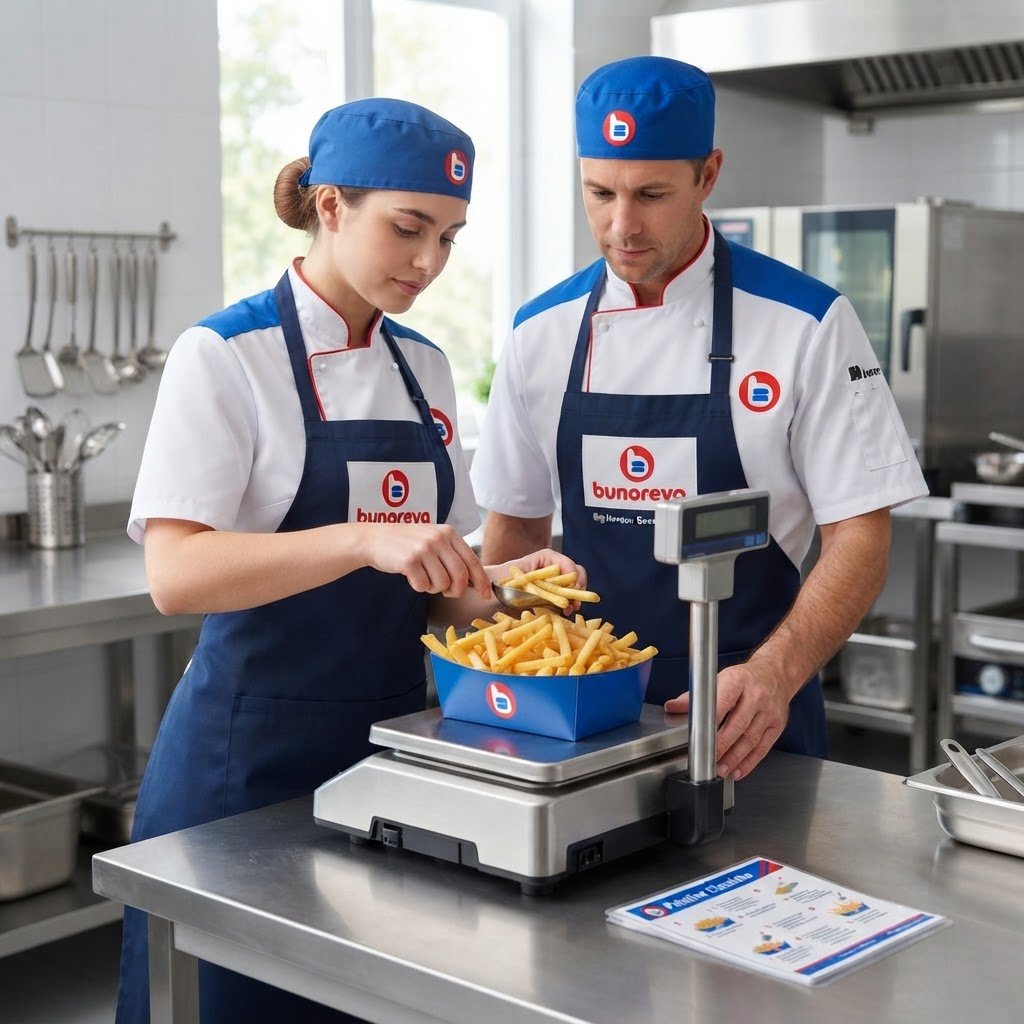
A Bunoreva kitchen trainer guiding a team member through a fries portion check.

Food preparation

Work through approved recipes, portions, preparation methods and presentation. Include storage, handling, cleaning and the locally required food-safety training.
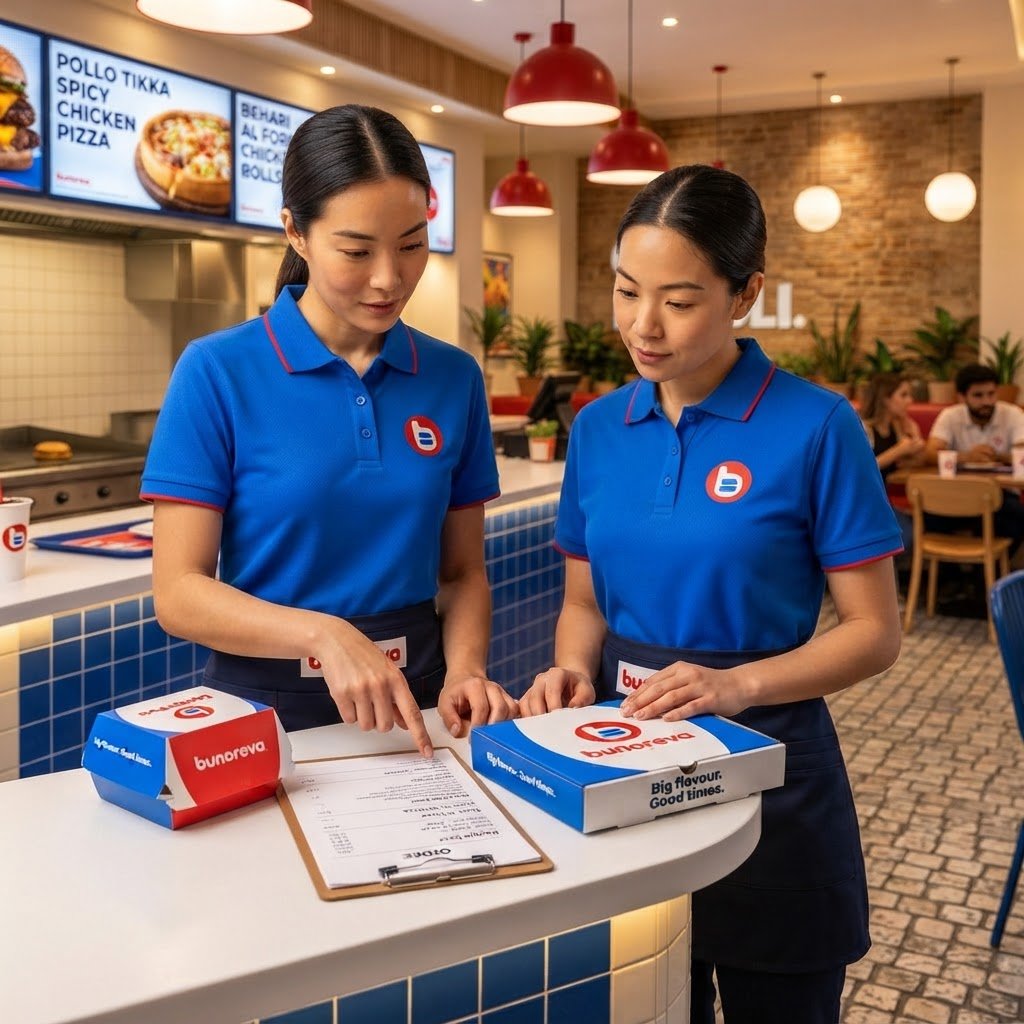
A Bunoreva trainer showing a team member how to check a takeaway order before collection.

Customer service

Practise counter orders, menu questions, order confirmation, collection and handling a problem calmly. Product and allergen information must be accurate and accessible.
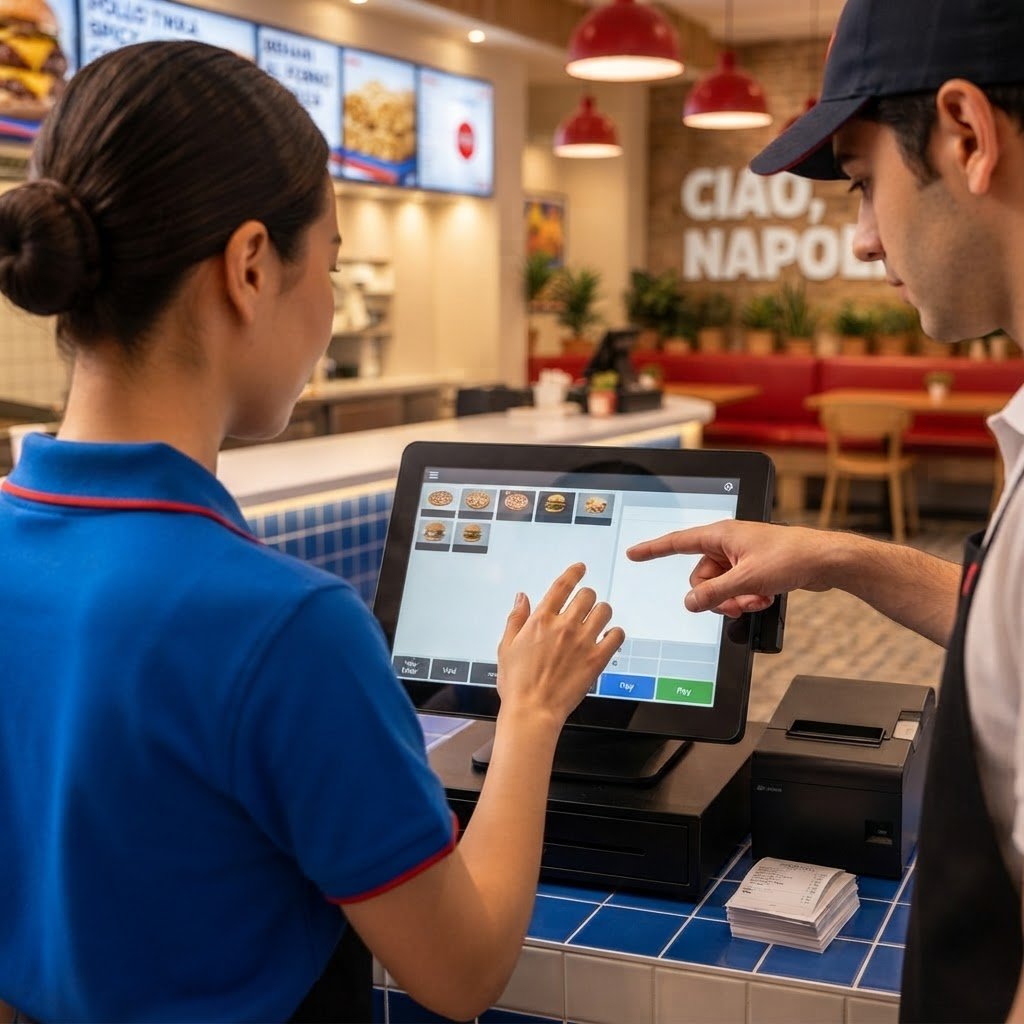
A Bunoreva team member practising an order on a POS terminal with a trainer beside them.

Systems & control

Test the POS, kitchen tickets, payment confirmation, voids, refunds and end-of-day reconciliation using the selected systems.
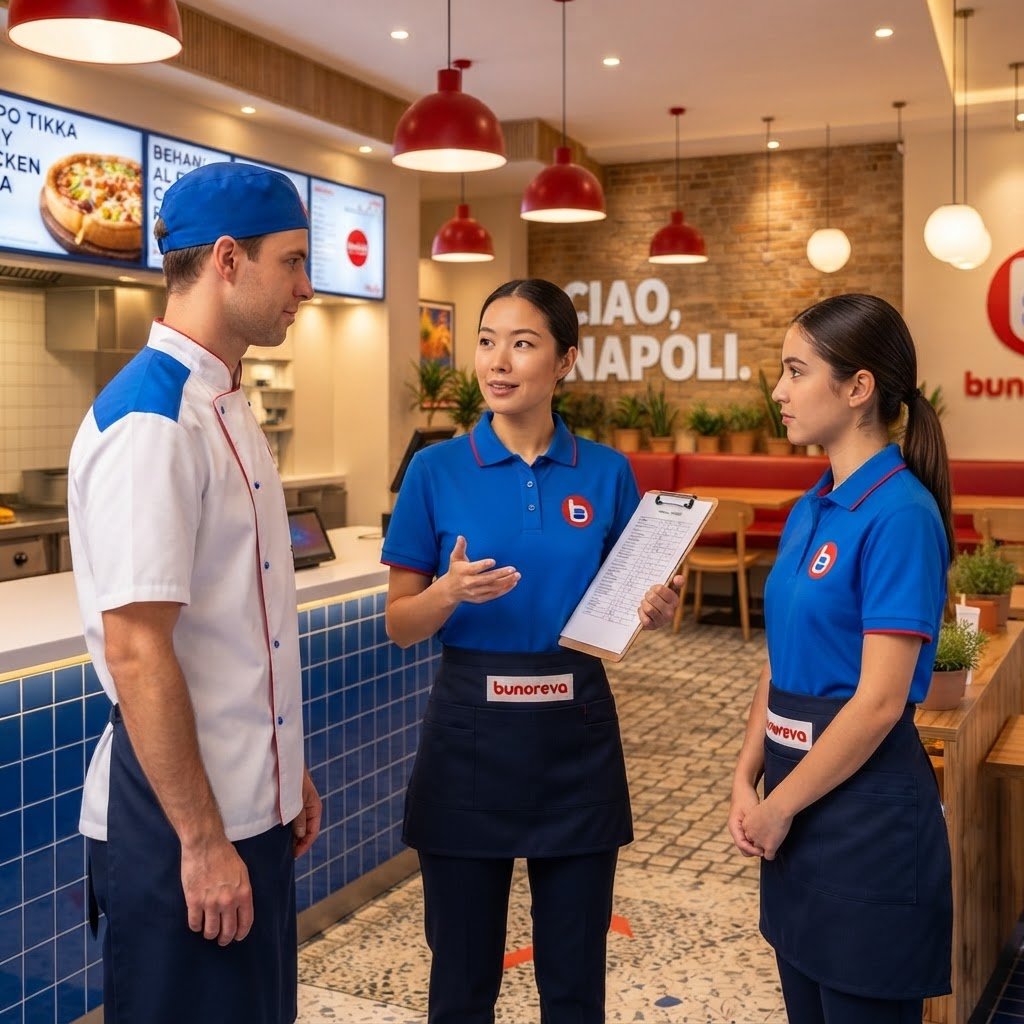
A Bunoreva shift leader briefing two team members before restaurant service.

Shift leadership

Prepare managers to organise the team, check readiness, record issues, monitor waste and lead a consistent opening and closing routine.
LET’S GET OPENING RIGHT

Opening day deserves proper preparation.

The first guests will notice the food, the welcome and how confidently the team handles an order. Launch activity should be planned alongside operating readiness, so the invitation matches what the restaurant can deliver.

The launch programme starts with local awareness and continues through a controlled opening into early trading. The partner and brand team agree the activities, budget, responsibilities and review points before the campaign begins.

Step 1

Before the doors open

Prepare approved local listings, opening information, campaign assets, photography and an invitation for the intended audience. Confirm the restaurant is ready before announcing a fixed date.

Step 2

A controlled first service

Use test orders and a soft opening to check preparation, ordering, payment and collection. Record issues and resolve them before scaling promotion.

Step 3

CIAO, [CITY]

Introduce the restaurant with a local greeting, clear food imagery and an invitation to visit or order. Select creators and local activity for relevance to the audience.

Step 4

Review the first weeks

Look at fulfilment, feedback, availability and campaign response. Adjust activity against the restaurant’s actual capacity and the agreed opening priorities.

BEYOND OPENING WEEK

Keep giving people a reason to come back.

A launch is one moment in the restaurant’s life. Ongoing marketing needs a rhythm: food worth showing, occasions worth talking about and local activity that gives the customer a clear next step.

A campaign calendar that keeps moving.

The Bunoreva programme works from a rolling campaign calendar. Central creative gives the brand a consistent voice; local adaptation makes the activity relevant to the city and the restaurant. Performance is reviewed so the next campaign can learn from what customers actually do.

The service schedule will confirm the deliverables, approval process and funding. Content production and advertising spend are different parts of the programme, and both need an agreed owner.

Rhythm What the programme includes Purpose
Rolling 90-day plan Campaign themes, product priorities, local actions and responsibilities. Give the restaurant a forward plan for its marketing.
Monthly creative package One hero campaign, 12 social assets and four short-video edits, with agreed local adaptation. Provide usable brand content for the approved channels.
Weekly activity review Review paid activity, offers and trading context. Adjust the activity against its objective and the restaurant’s capacity.
Monthly performance report Review campaign delivery and available business results. Agree what to continue, change or stop.
A LITTLE ITALIAN PERSONALITY

Italian character. Local occasions.

The campaign system should give the restaurant recognisable ideas to use across the year. A consistent visual identity connects the activity, while the product, the occasion and the invitation change.

The examples below show the direction. Local offers, timing, prices and available products are agreed for the market, so the campaign promises something the restaurant can fulfil.

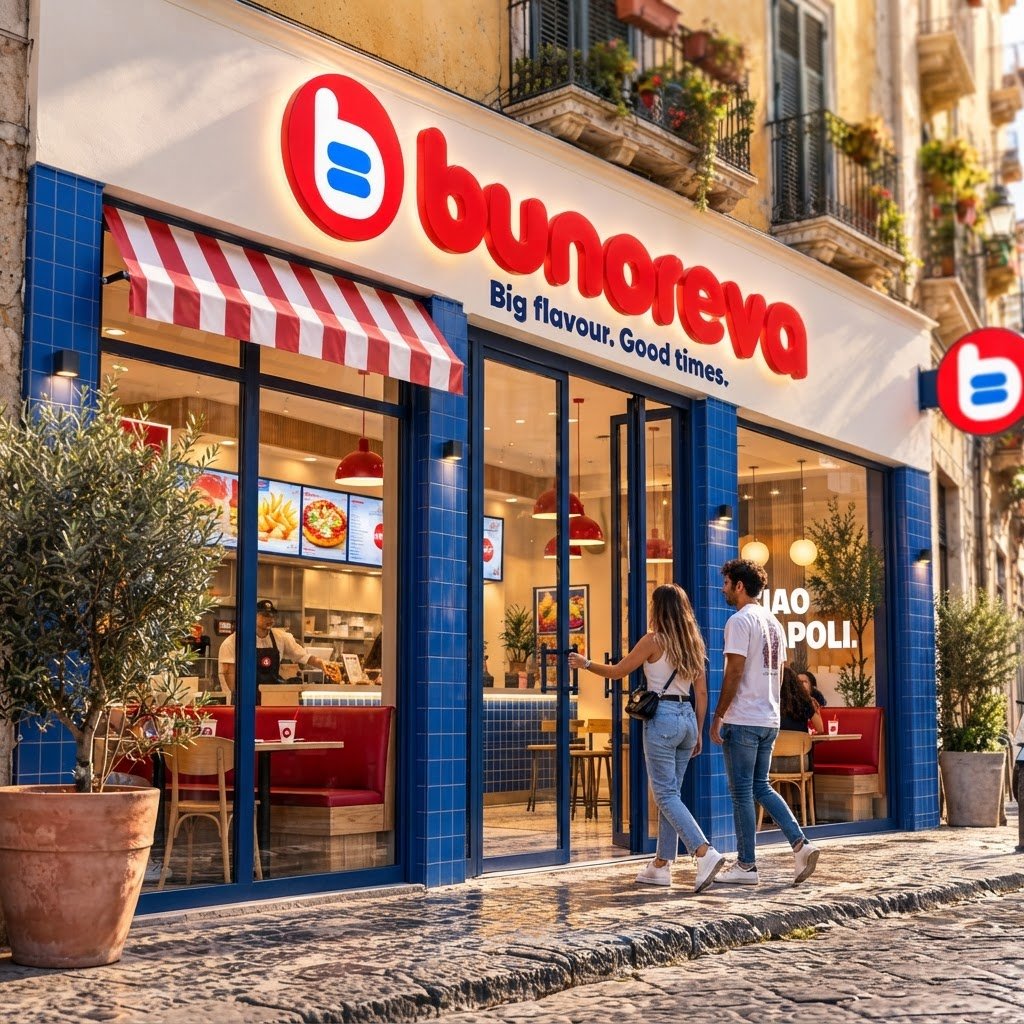
Two people approaching a Bunoreva restaurant with a blue frontage and red-and-white awning.

CIAO, [CITY]

Sample customer line: “Your new Italian appetite has arrived.” Use for a confirmed opening, supported by accurate location, opening details and an invitation to visit or order.

Bunoreva Pausa Rotolo lunch meal arranged on a wooden table beside a window.

Pausa Pranzo

Sample customer line: “Lunch. Properly sorted.” Use for complete lunch choices, office outreach and clear collection information during agreed trading hours.
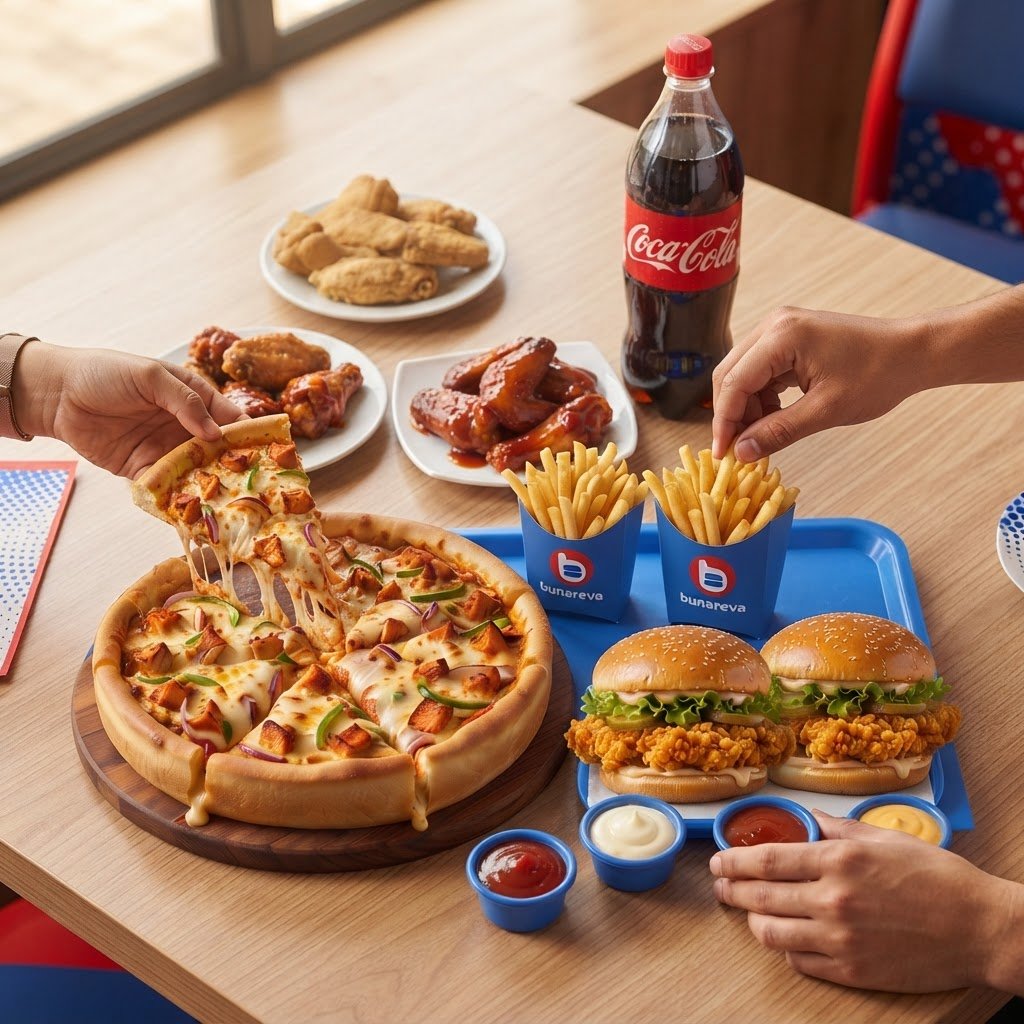
Hands reaching for pizza and fries from a Bunoreva Tutti a Tavola sharing meal.

Tutti a Tavola

Sample customer line: “Good food. Better company.” Use for sharing occasions with the full contents, serving guidance and local price clearly stated.

Bunoreva Brownie Caldo served on a ceramic plate against a softly blurred blue background.

Dolce Finale

Sample customer line: “There’s room for a sweet finish.” Use for an available dessert or drink, with a simple invitation to add it or enjoy it in the restaurant.

BEHIND EVERY GOOD SERVICE

Keep the everyday details under control.

Food standards, order accuracy and daily controls shape what the customer experiences. The operating approach gives the restaurant routines to follow and a way to identify problems early.

Technology should help the team do that work. The chosen POS, ordering and reporting systems need to be tested against the actual menu and channels, with local payment, tax and data requirements assessed before launch.

Menu and supply

Maintain agreed recipes, product specifications and supplier approval processes. Review substitutions through the brand process so the customer offer stays consistent.

Orders and payment

Use common product codes, clear kitchen tickets and reconciled payments. Test sold-out items, errors, refunds and collection before the first public service.

Food and service

Use opening, closing and service checks to keep preparation, presentation, cleaning and handover consistent. Record issues and actions clearly.

Review and improve

Use available sales, product mix, waste, order accuracy and customer feedback to decide where management attention is needed. Reports should support action, not simply collect numbers.

WHO DOES WHAT

Clear responsibilities make a stronger partnership.

The brand team and local owner bring different responsibilities to a restaurant. Those responsibilities need to be visible before opening, particularly where a decision affects cost, timing or the customer experience.

Agree who does what before opening.

The summary below describes the division of work. The final support schedule identifies named contacts, deliverables and approval responsibilities for the particular market and project.

Area Brand-team role Local-partner role
Restaurant planning Brand standards and review of the restaurant design. Premises, local professionals, permissions and funded delivery.
People and training Agreed product and operational training materials and guidance. Recruitment, management, attendance and ongoing staff supervision.
Marketing Core brand direction, agreed campaign assets and review. Approved local activity, media budget and restaurant-level execution.
Trading and standards Agreed reviews, guidance and approval of brand changes. Daily operations, purchasing controls, records and customer service.
Local compliance Provide relevant brand information and agreed cooperation. Obtain local professional advice and meet applicable operational obligations.
BUILDING THE BUSINESS TOGETHER

What sits behind the brand?

What support comes with a Bunoreva franchise?

The support package covers the agreed work around restaurant planning, training, opening preparation, marketing and operating standards. The scope and responsibilities are set out for your market before you commit.

The training plan sets out the product knowledge, preparation routines, order handling and service standards your team needs. It also identifies who attends, how training is delivered and how readiness is checked.

Opening week is the start of the story. The marketing programme brings together brand campaigns, food content and local activity, with deliverables, timing and review points set out in the support schedule.

The commercial terms set out any marketing contribution and the partner’s local advertising budget. They also explain which creative materials and services are included and which carry an additional cost.

Absolutely. Local knowledge helps make a campaign relevant. Share your idea with the brand team so the message, artwork, offer and delivery can be checked before it goes live.

MAKE YOUR SUPPORT PLAN

Let’s talk about what your restaurant needs.

Your market, your experience and your site will shape the support conversation. Tell us what you already have in place and where you would need guidance, from the first layout to the opening campaign.

Shape the support around your plans.

We can then work through the package, responsibilities and next steps together.